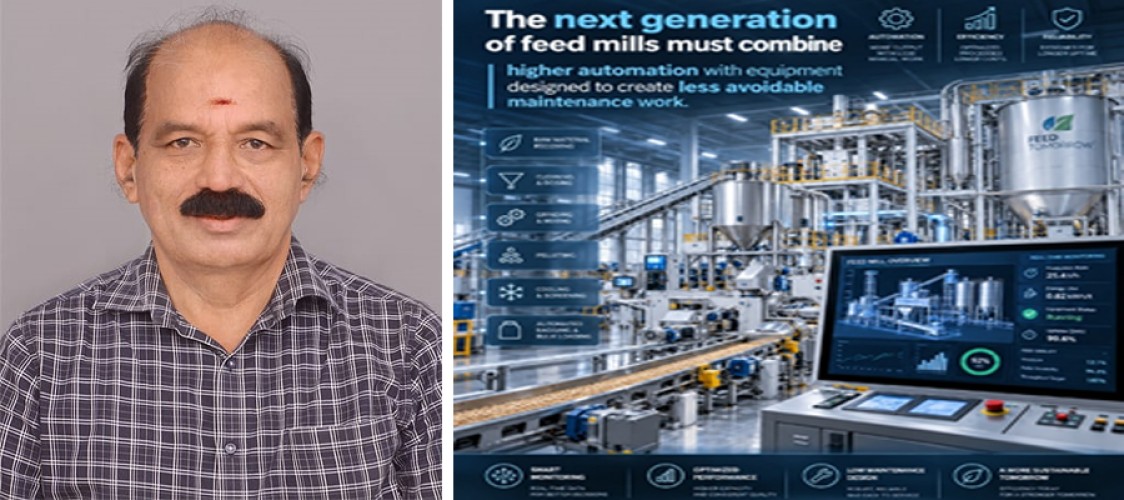
File Photo
In mechanical milling (MM), a suitable powder charge (typically, a blend of elemental powders) is placed in a high-energy mill, along with a suitable milling medium. The objective of milling is to reduce the particle size and blend particles in new phases. The different types of ball milling can be used for the synthesis of nanomaterials in which balls impact upon the powder charge. The balls may roll down the surface of the chamber in a series of parallel layers, or they may fall freely and impact the powder and balls beneath them. For large-scale production with nano-sized grain, mechanical millings are more economical process. The kinetics of mechanical milling or alloying depend on the energy transferred to the powder from the balls during milling. The energy transfer is governed by many parameters, such as the type of mill, the powder supplied to drive the milling chamber, milling speed, size and size distribution of the balls, dry or wet milling, temperature of milling, and the duration of milling. Since the kinetic energy of the balls is a function of their mass and velocity, dense materials (steel or tungsten carbide) are preferable to ceramic balls, and the size and size distribution should be optimized for the given mill. Too dense packing of balls reduces the mean free path of the ball motion, while a dilute distribution minimizes the collision frequency. The temperature during milling can depend on the kinetic energy of the ball and the material characteristics of the powder and milling media. The temperature of the powder influences the diffusivity and defect concentration in the powder, influencing the phase transformations induced by milling. Higher temperatures are expected to result in phases that need higher atomic mobility (intermetallics), while at lower temperatures, the formation of amorphous phases is expected if the energy is sufficient. Low temperature can also enhance the formation of nanocrystalline phases. In addition, the high-strain-rate deformation and cumulative strain accompanying collisions of balls lead to particle fracture. These competing fracture and coalescence events continue throughout processing. Indeed, a suitable balance between them is required for success with the alloying process. In most applications, the balance is such that an approximate steady-state powder size distribution is obtained. In this stage, the particles are often shaped like flakes, and even though a steady-state powder size is found, continued microstructural refinement occurs as a result of the repetitive fragmentation and coalescence events.
See Also: https://gfmdhaka.com/
Key Aspects of Mechanical Milling for a feed mill:
• Primary Equipment: The most common machine is the hammer mill, which uses rapidly rotating hammers to strike ingredients against a screen, forcing them into a powdery state. Roller mills are also used to create a more homogeneous mixture with fewer "fines" (excessively fine particles).
• Purpose:
o Improved Digestibility: Increasing the surface area of ingredients allows for better interaction with digestive fluids.
o Uniform Mixing: Reducing particle size allows for more uniform blending of ingredients.
o Pellet Quality: Fine particles are essential for creating durable, high-quality pellets, as they allow for better starch gelatinization during conditioning.
o Energy Efficiency: Proper grinding (e.g., using larger diameter hammer mills) can save 15-20% on electricity.
Common Equipment
Different types of mills are used depending on the energy required for the material:
• Planetary Ball Mills: High-energy mills where vials rotate around their own axes and a central disk, generating centrifugal forces up to 20 times the force of gravity.
• Attrition Mills: Stirred ball mills where a central rotating shaft with impellers agitates the grinding media.
• Shaker Mills (e.g., SPEX): Highly energetic mills that agitate a vial in three perpendicular directions at once.
• Tumbler Mills: Low-energy mills where a horizontal drum rotates, causing balls to cascade over the material.
Applications and Advantages
Mechanical milling is widely used in advanced material synthesis and nanotechnology for:
• Nanocrystalline Materials: Producing powders with grain sizes as small as 10 nm.
• Amorphous Alloys: Creating non-crystalline structures in systems where standard melting and casting are difficult.
• Nanocomposites: Uniformly dispersing hard reinforcements (like SiC or Al₂O₃) into a metallic matrix.
• Mechanochemical Synthesis: Inducing chemical reactions between different powders at low temperatures.
Note on Terminology: A distinction is often made between mechanical milling (MM) and mechanical alloying (MA). MM generally refers to the processing of a single, already-alloyed material to reduce its size, whereas MA involves milling elemental powders together to create a new alloy.
• Key Process Factors:
The core of mechanical milling is the ball-powder-ball collision. Powder particles are trapped between colliding grinding media (usually steel or ceramic balls) and undergo three main stages:
o Particle Size Control: The desired size is determined by the screen holes in the grinder.
o Moisture Content: Dry ingredients are easier to grind efficiently, though some applications may add liquids.
o Maintenance: Regularly reversing the hammer rotation and replacing screen sheets are necessary to maintain efficiency.
• Processes:
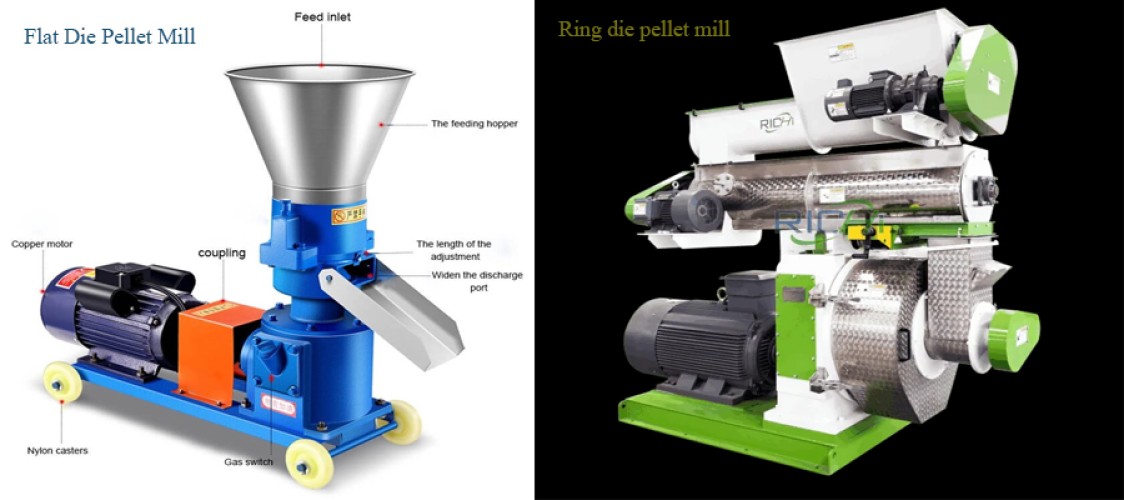
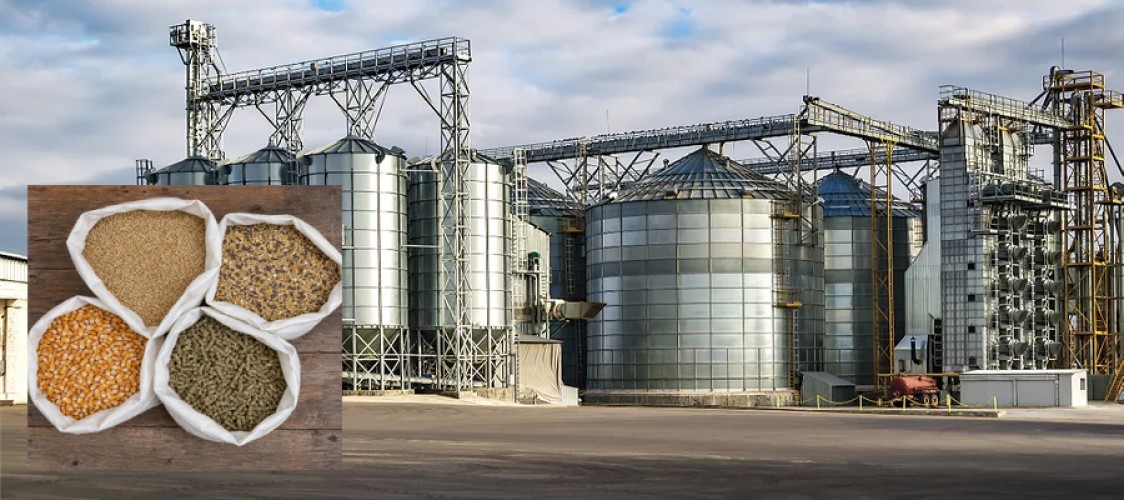
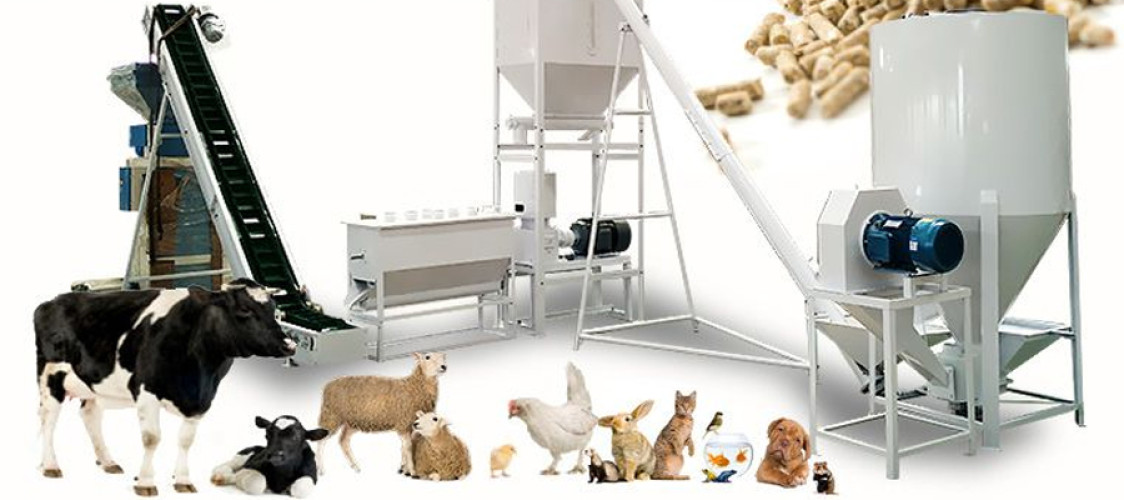
Often, ingredients are ground individually (pre-grinding) before being mixed, although sometimes they are mixed first and then ground. The feed milling process converts raw ingredients (grains, proteins, additives) into balanced animal feed through a series of steps: raw material receiving, cleaning, grinding, batching, mixing, conditioning, pelleting, cooling, crumbling, screening, and packaging. Key processes include reducing particle size (grinding) and shaping feed into dense, nutritious pellets (pelleting).
Mechanical milling consumes approximately 1/3 of the total power in a feed plant, making it a critical area for energy efficiency and production cost control.
-SZK, Based on online information

















Copyright © 2026 LIMRA Exhibitions. All Rights Reserved.
Website Design & Development ♡ MY SOFT IT
 EN
EN
 Chinese
 Turkish
 Indonesian
 German
 French
 Spanish
 Portuguese
 Russian
 Italian